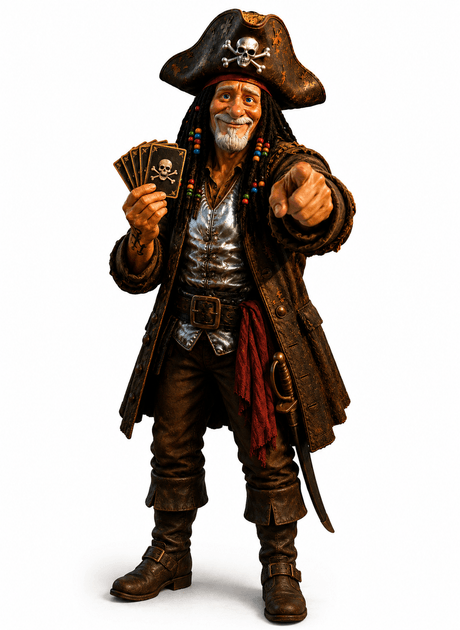


The Art Behind Pirate Patience™
Human Created. Digitally Crafted. AI Assisted.
HOW THE ARTWORK WAS CREATED
Pirate Patience™ was never about pressing a button and asking a computer to make a pack of cards.
It grew through ideas, experiments, mistakes, revisions, layers upon layers of artwork and countless small decisions about how the Pirate Patience world should look.
Real people became characters. Photographs became references. Individual elements were drawn, altered, layered, coloured and sometimes completely rebuilt.
Modern technology played its part. I used different programs for different jobs and, occasionally, AI helped me solve a problem, research an idea or visualise something I was struggling to create.
But technology was always a tool in the process — not the creator of the finished game.
Human imagination made it Pirate Patience™.
Technology helped build the pieces.Human imagination and skill made it Pirate Patience™.
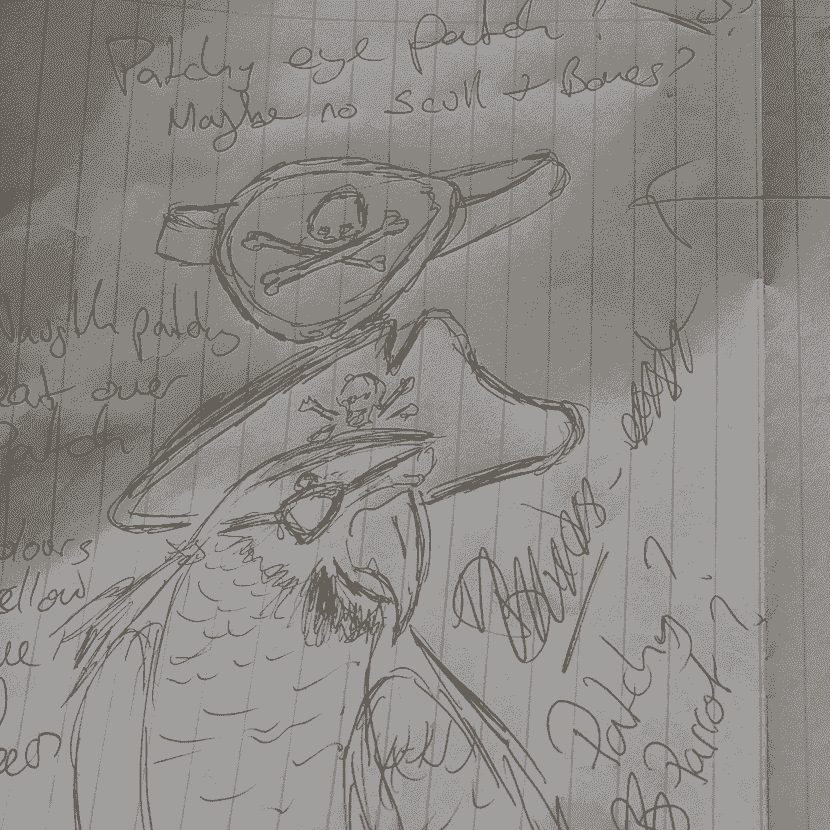
It starts with an idea....
Patchy? Patchy Parrot or Parrot?
Early ideas didn't always resemble the finished cards — and sometimes one idea ended up creating something completely different.
Patchy was one of my earliest character designs. I wanted him to be a naughty parrot who didn't actually need an eye patch. Instead, he'd cheekily peek over the top of one while spying on things
for The Captain Captain.
But while developing him, I realised the eye patch itself deserved to become part of the game.
That original idea eventually split into two separate cards: the Eye Patch became Card No. 1, while Patchy the Parrot became Card No. 6.
One early drawing had accidentally helped create two pieces of Pirate Patience™.
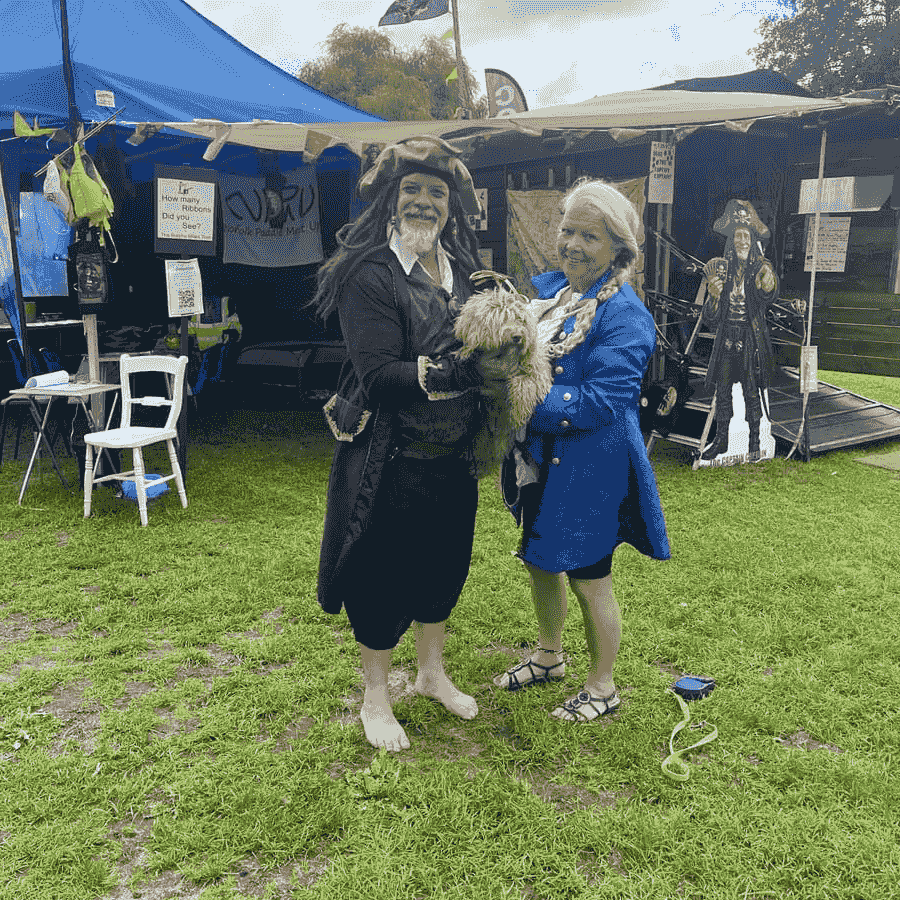
From real people (and dog) to Pirates!
The Captain Captain.....
Some Pirate Patience characters had a life before the game even existed.
The Captain Captain actually began life around 2021, when I created him as a character for the Norfolk Paddle Meet Up community.
He was a slightly naughty pirate who made mistakes, got things wrong and generally thought he was considerably cooler than he really was.
The children loved his daft adventures — and
The Captain Captain stuck around.
Years later, when Pirate Patience™ began taking shape, it seemed only right that he should find himself at the heart of the game.
Other characters followed a slightly different journey.
The Captiness started life as an illustrated character before eventually being brought to life by a real person — while Daisy Dog joined the crew much later.
In fact, Daisy arrived so late in the artwork process that Card No. 2 — the Crow's Nest — had to be opened back up and re-layered just so she could take her rightful place aboard.
Photographs, real people and real personalities provided inspiration, while digital tools helped transform them into the characters you see today.
They weren't created to look like generic pirates.
They had to look like Pirate Patience pirates.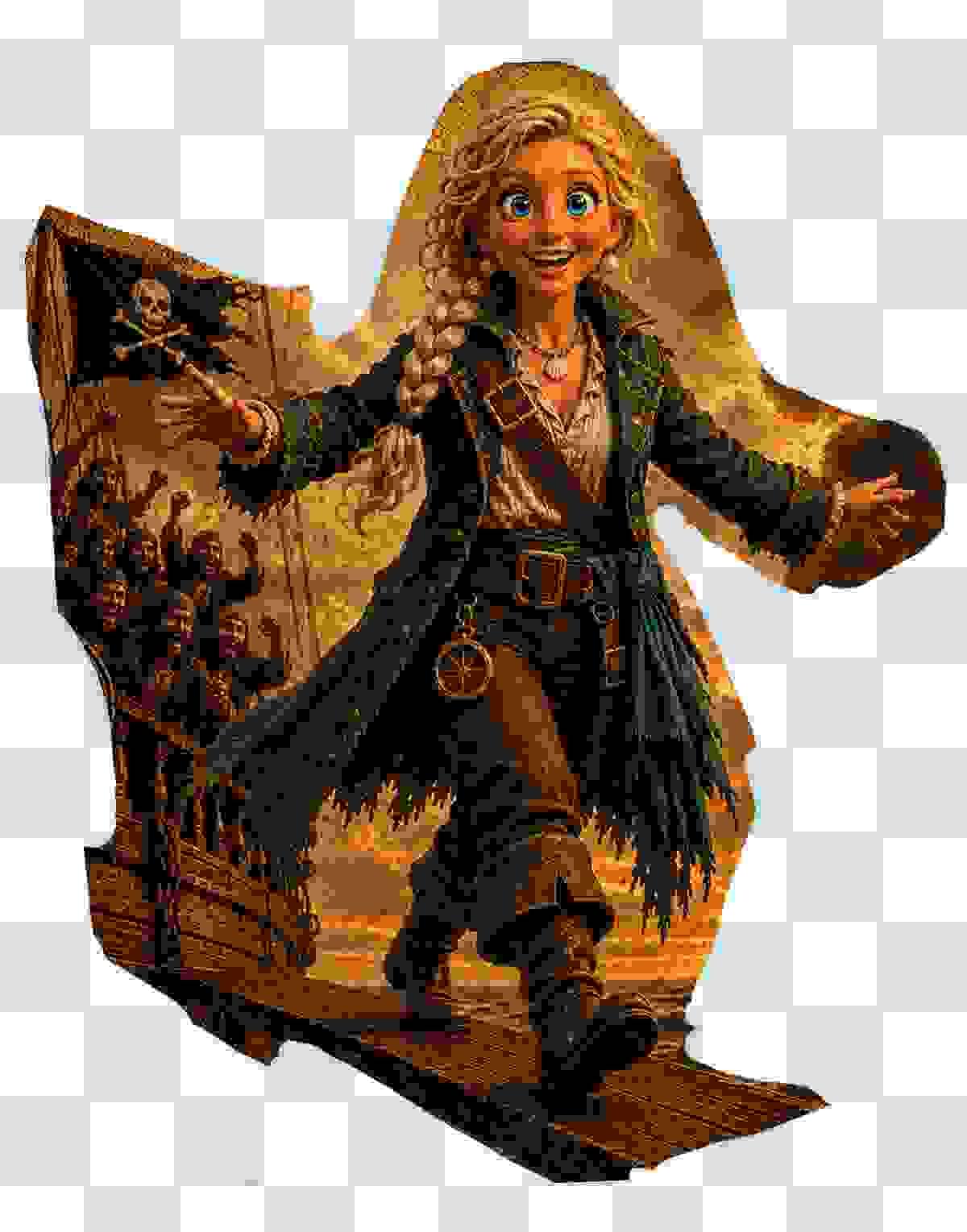
Finding the missing piece.
When the brain knows what it wants — but can't quite work out how to create it.
How do you draw a mutiny?
Without a doubt, this was one of the card designs that had me completely stumped.
I spent hours looking out across the North Sea, trying to wrap my head around one question:
How do I turn “Mutiny” into a single picture that instantly makes sense on a playing card?
This was one of those moments when AI genuinely helped. I gave ChatGPT my existing character, The Captiness, and asked it to place her into a mutiny situation. This time, it understood what I was trying to achieve. It didn't redesign my character — it gave me the missing piece of inspiration I needed.
The Captiness had tried to cause a mutiny... so she was going to walk the plank.
Now I had my scene.
From there I could build the plank, create the ship and backdrop, position the characters and construct the finished card around the idea.
AI hadn't made Pirate Patience™ for me.
It had simply helped me get past a creative roadblock — and then I could get back to building.
Reference, not finished artwork.
What should a pirate card actually look like?
By this point, the idea for Pirate Patience™ was taking shape and my early drawings were gradually becoming finished artwork. But I had a problem.....
What should a Pirate Patience card actually look like?
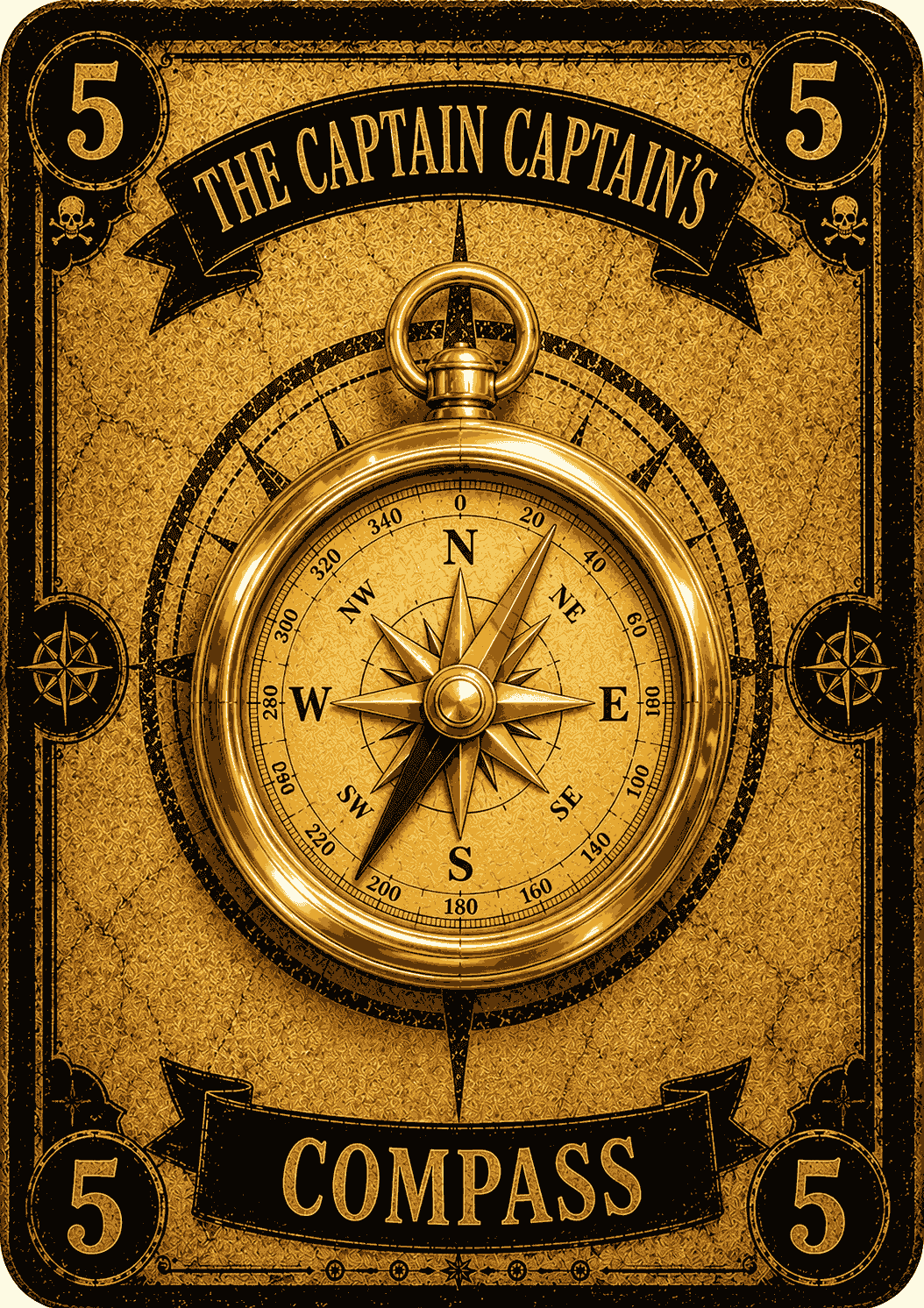
I had already created an early version of the Compass, but creating an individual piece of artwork and making it work as part of a playing card were two very different things. So I experimented.
I gave my Compass artwork to both ChatGPT and Grok and asked them to show me how it might look incorporated into a pirate-style playing card.
Interestingly, both came back with fairly similar ideas — and both made it Card No. 5.
But neither looked like Pirate Patience.
The Compass didn't sit comfortably within the card, the style didn't match what I was beginning to create, and the overall result simply wasn't right.
But that experiment was useful. It showed me what didn't work — and helped me understand what I needed to build for myself.
By then I'd already invested more than 150 hours into developing the game.
There was no turning the ship around now...
One picture. Fifteen layers.
The Compass got me lost!
This was all completely new territory for me.
I'd never considered myself a graphic designer and suddenly I was learning illustration software, working with layers, masks, colours, shadows and effects — often by trial and error.
Adobe was where I started. I'd never used it before, so there were plenty of moments when ChatGPT became my unofficial instruction manual:
“Where's the masking brush?”
“What have I done here?”
“Why has it done that?”
“How do I undo this?!”Then I discovered Affinity.
I found its way of working easier to understand, so gradually the Pirate Patience artwork moved across and I began building the cards there.
And building really is the right word.
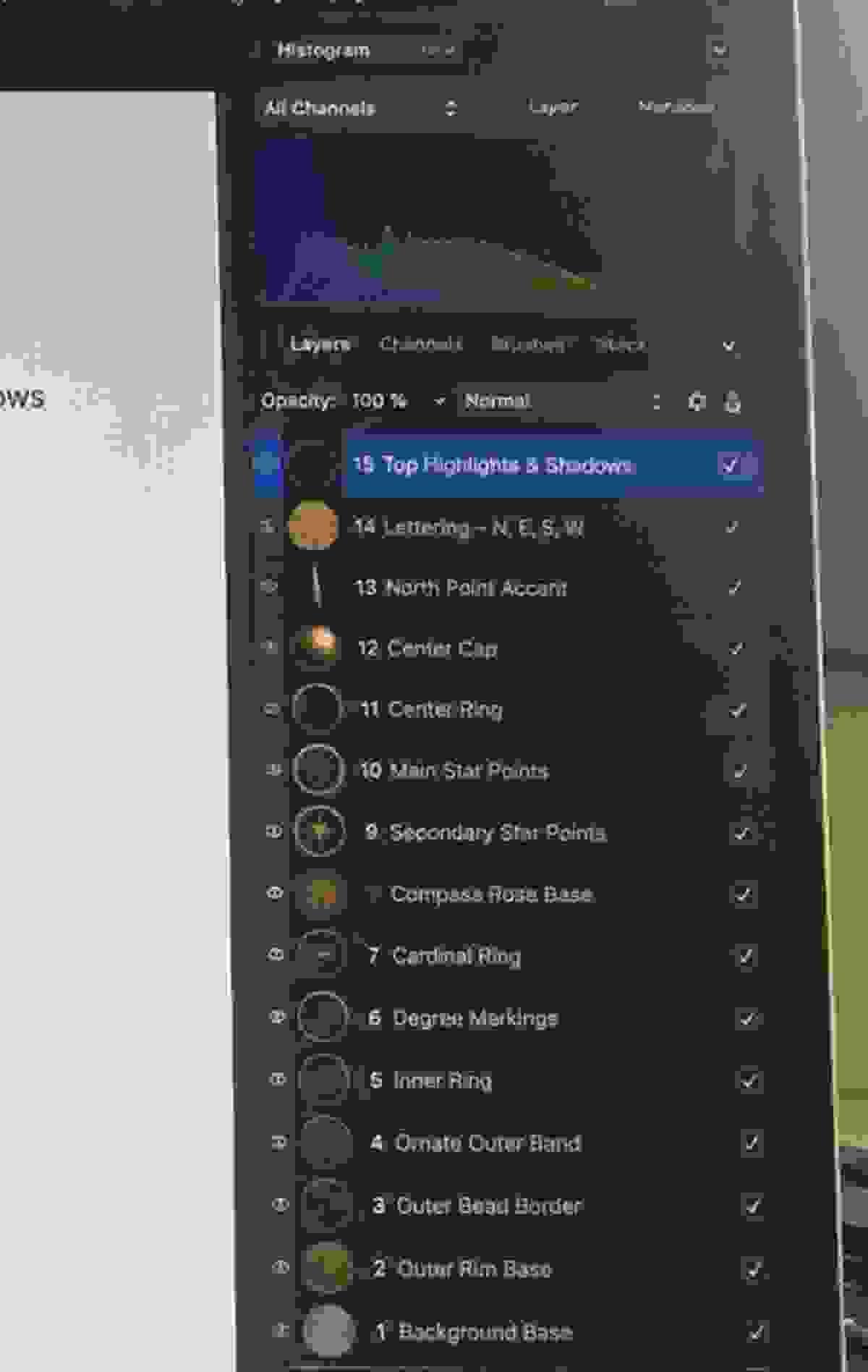
Something that looks like one simple image on a finished card could actually be made from 15, 16, sometimes 20 or more separate layers — each one controlling a different part of the artwork.
The Compass was a perfect example.
My original flat version simply didn't work. It didn't have the depth of the other cards and, once everything started coming together, it looked out of place.
So despite the hours already spent on it, I rebuilt it.
The lettering, compass points, rings, centre, shading, highlights and other details could all become individual elements that I could adjust independently until the whole thing finally worked.
Some layers survived. Others were changed. Some disappeared completely.
Fifteen layers later, I'd finally found my Compass.
A small change affected other cards
CHANGE ONE THING... AND SOMETHING ELSE MOVES
There were several times when I thought I'd finally finished.
Everything looked right on the screen, the cards worked individually and I was ready to move on.
Then came the trial prints.
Seeing the artwork at actual playing-card size could reveal problems I simply hadn't noticed on a computer screen.
A border could suddenly look too busy. A number might not sit quite right. Lettering that looked perfectly clear on screen could become lost inside a banner. Even changing a background on one card could make another card feel completely out of place when the deck was laid out together.
And that was the challenge.
I wasn't designing one card. I was designing a deck.
Change one element and sometimes several other cards needed adjusting to keep everything consistent.
I lost count of the tweaks, redesigns and pieces of artwork that didn't make the final cut.
But every mistake taught me something.
As I understood what wasn't working, the problems became easier
to spot and the artwork became cleaner.
And sometimes the answer was surprisingly simple:
Less is more.
Look closely.
A human touch
There are little details hidden throughout Pirate Patience™
that most people will probably never notice.
I call them my Hidden Pirate Treasure.
Each of the numbered cards contains a deliberately faded clue to the next card in the sequence.
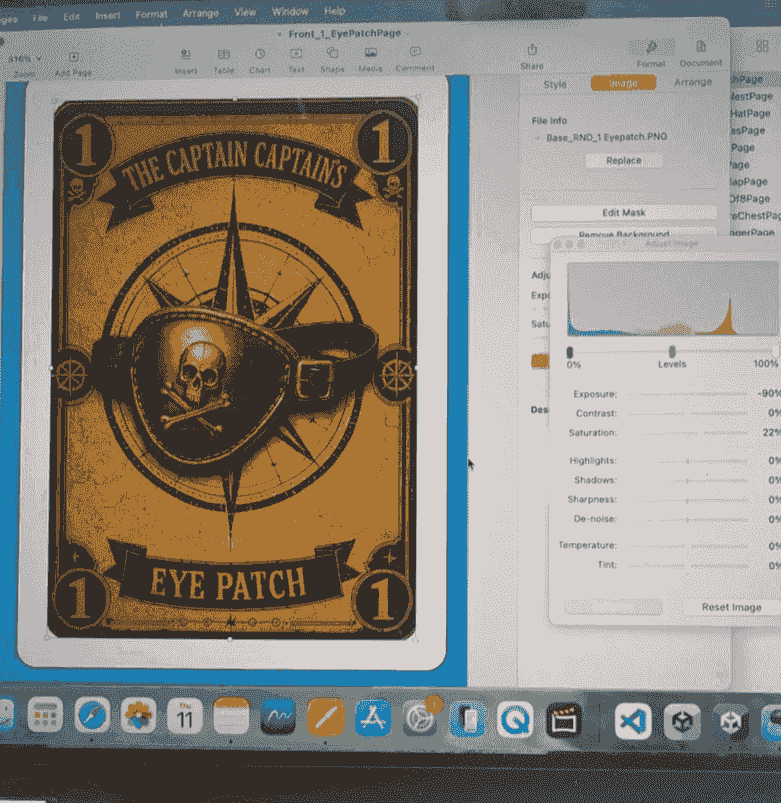
Card No. 1 — the Eye Patch — contains a glimpse of No. 2, the Crow's Nest.
No. 2 leads you towards No. 3... and the trail continues through the deck.It was a small detail that didn't need to be there. It doesn't change the game and you could play Pirate Patience a hundred times without ever noticing it.
But I knew it was there.
And on Card No. 7 — the Pirate Map — I took things a little further.
I hid its clue so carefully that I could use it as
one of the tiny details to help identify a genuine Pirate Patience™ card.
I used the same thinking elsewhere in the deck too —
including the card backs.
But I'm certainly not telling you where everything is hidden...
A pirate has to keep some of his treasure secret.
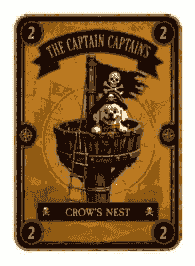
The final result.
The Pirate Treasure didn't end there!
Hundreds of individual decisions, countless layers, discarded ideas, redesigns and a fair few mistakes eventually became Pirate Patience™.
But before the finished cards went to print, I couldn't resist adding
one final piece of Hidden Pirate Treasure.
It's deliberately hidden. And I'm not telling you where it is.
In fact, nobody else knows exactly what they're looking for.
So if you happen to find it, there's only one rule...
You and I enter into a Special Pirate Alliance.
You say nothing.
I say nothing.A pirate knows how to keep a secret. 🏴☠️


